




Lorsque C boot path not found correspond à votre situation, commencez par protéger les données avant de multiplier les réparations. La bonne approche consiste à comprendre ce qui a changé, à évaluer le risque pour les fichiers, puis à choisir l’action la moins destructive.
L’intention de recherche reste précise : Resolve a C:\boot path-not-found error without writing blindly to the wrong Windows installation. Cette limite évite de transformer un cas particulier en liste de dépannage générique.
Le risque principal est le suivant : WinRE can assign different drive letters, so commands aimed at C: may touch the wrong volume. Avant de modifier des pilotes, des paramètres ou une installation, vérifiez si des fichiers non sauvegardés se trouvent encore sur la source.
C boot path not found : diagnostic sans risque
Basez-vous sur les indices visibles : message exact, moment d’apparition, stabilité de l’ordinateur, fichier unique ou problème global. Cette observation évite de confondre un réglage réversible avec une panne de stockage.
Avancez des actions réversibles vers les opérations plus fortes. Rouvrez, redémarrez une seule fois, essayez un autre compte, vérifiez les sauvegardes et copiez les fichiers importants si le système reste stable.
Dès qu’un disque, un fichier supprimé, un document endommagé ou un démarrage défaillant est en jeu, la récupération précède la réparation. Les commandes système et les réinstallations peuvent modifier la source.
- Record the exact error text, app name, device, and recent change.
- Decide whether the source is stable enough to copy or scan.
- Keep the original file, disk, or workbook untouched whenever possible.
Protéger les fichiers et vérifier les sauvegardes
Le risque principal est le suivant : WinRE can assign different drive letters, so commands aimed at C: may touch the wrong volume. Avant de modifier des pilotes, des paramètres ou une installation, vérifiez si des fichiers non sauvegardés se trouvent encore sur la source. Check backups, version history, synced folders, external drives, and any recent exports before changing the source.
Helpful adjacent guides include récupération de données Windows récupérer des fichiers supprimés récupération de disque dur récupération de carte SD. Use those pages for broader recovery background; this page stays focused on C boot path not found.
Choisir la correction la moins destructive
| Evidence | What it usually means | Safer next action |
|---|---|---|
| One file or one app | Local setting, permission, cache, or file-level issue | Copy the file and test reversible fixes |
| Whole PC or boot path | Windows, driver, boot, or storage condition | Protect files before reset or command-line repair |
| Unstable device | Possible media or hardware trouble | Stop repeated attempts and recover or image first |
Official documentation is useful for boundaries, especially official guidance official guidance. Treat it as guidance for supported Windows, Office, or Firefox behavior, not as proof that one repair will work in every environment.
Quand Drecov est utile
PandaOffice Drecov convient seulement si des fichiers locaux, un classeur, une vidéo, une archive ou un emplacement Windows doivent être récupérés avant la réparation. C’est un logiciel Windows de récupération de données pour PC, clés USB, cartes SD, cartes mémoire, disques durs, SSD et disques externes.
⚠ Avertissement : installez Drecov sur un autre disque que celui où les données ont été perdues afin d’éviter de les écraser.
Step 1
ouvrez Drecov et sélectionnez l’emplacement d’origine ou le mode adapté. This keeps recovery separate from repair and avoids writing recovered files back to the source.
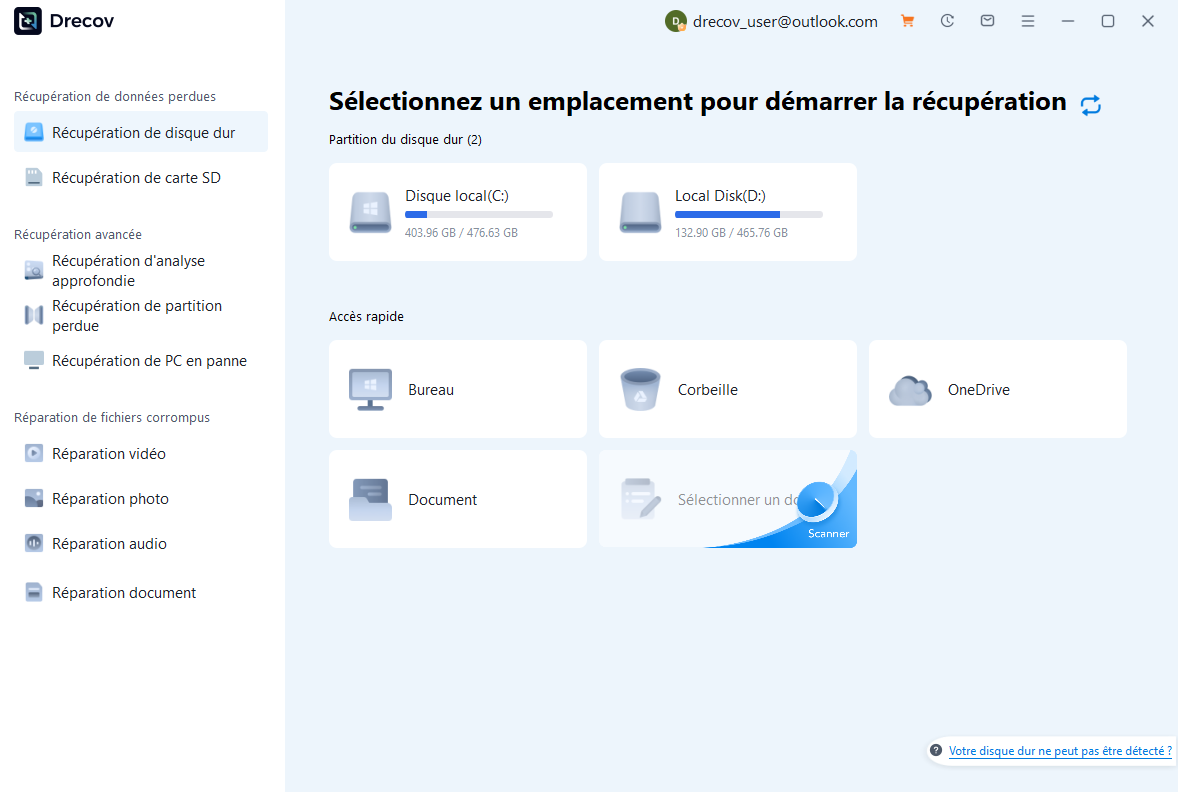
Step 2
lancez d’abord Quick Scan et examinez les dossiers, types, noms ou dates. This keeps recovery separate from repair and avoids writing recovered files back to the source.
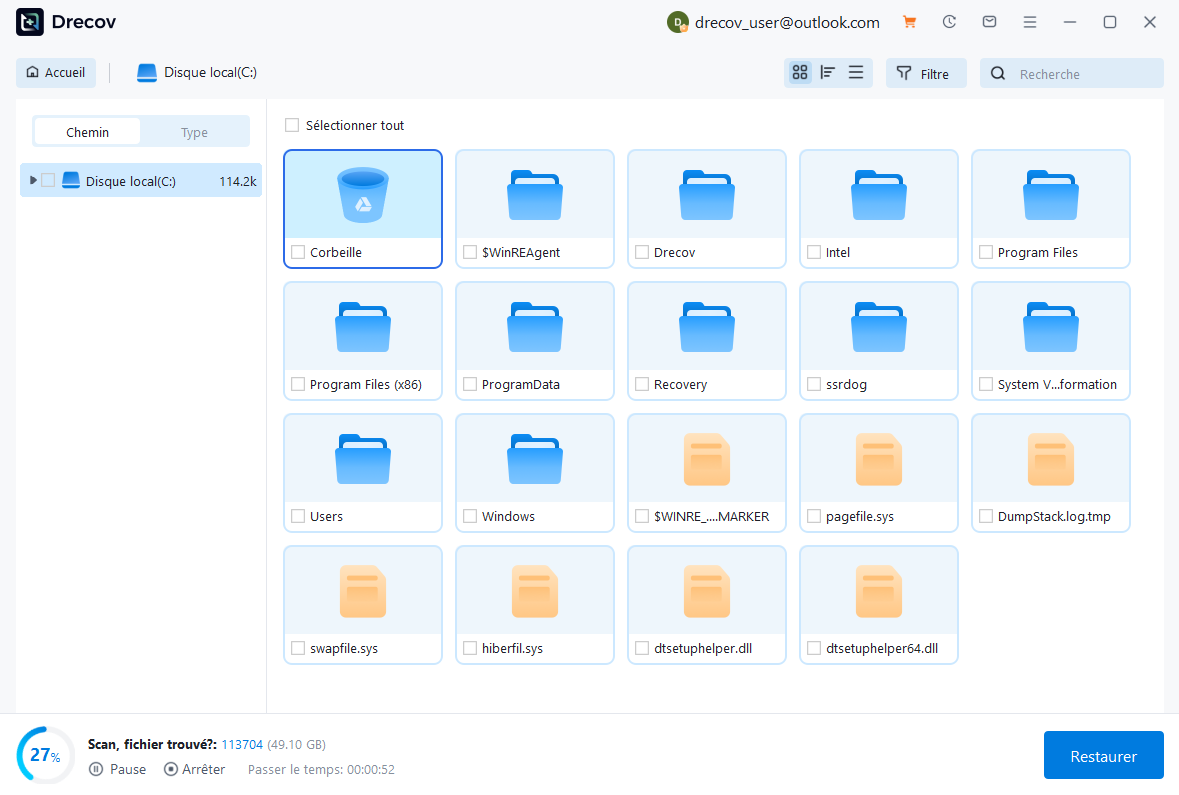
Step 3
utilisez Deep Scan si Quick Scan ne trouve pas les fichiers et si le périphérique reste stable. This keeps recovery separate from repair and avoids writing recovered files back to the source.
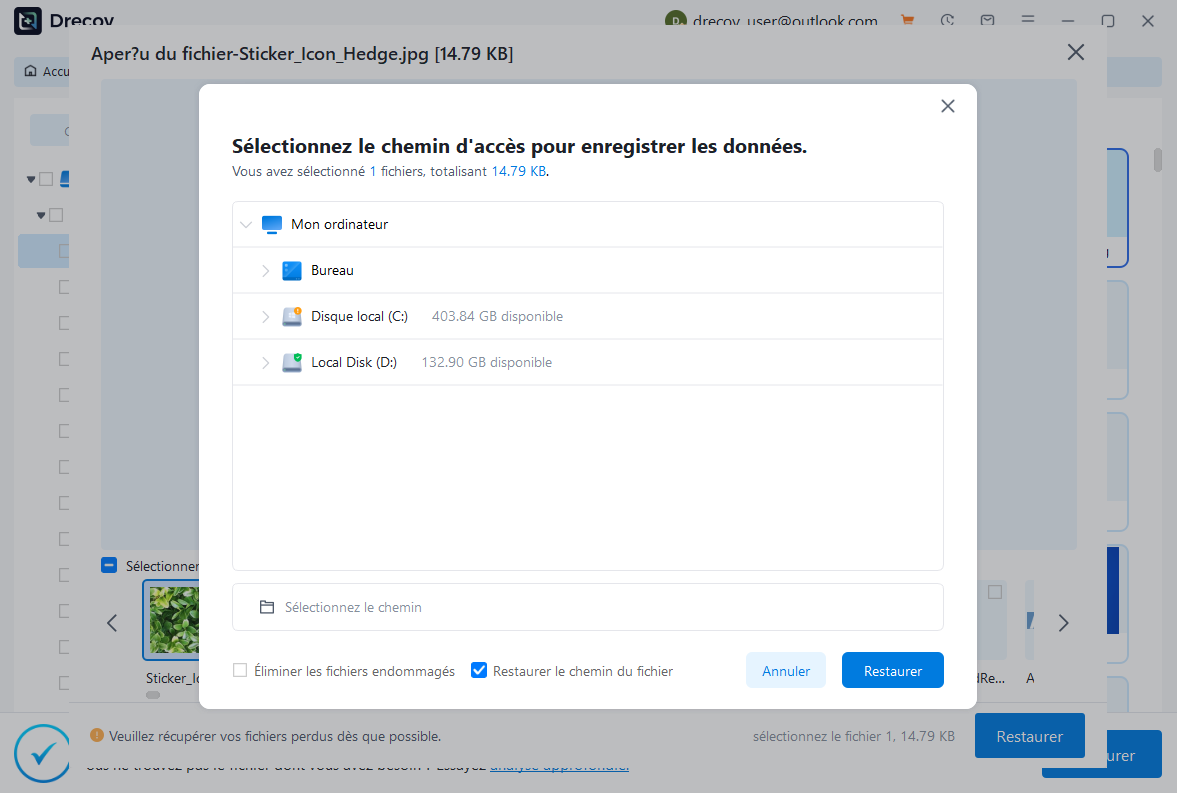
Step 4
filtrez, recherchez, parcourez et prévisualisez les fichiers. This keeps recovery separate from repair and avoids writing recovered files back to the source.
Step 5
récupérez les fichiers sélectionnés vers un autre support sain, jamais vers la source. This keeps recovery separate from repair and avoids writing recovered files back to the source.
⚠ Avertissement : installez Drecov sur un autre disque que celui où les données ont été perdues afin d’éviter de les écraser.
Step 6
vérifiez les fichiers et consultez le Drecov Folder ou Recovery Folder si nécessaire. This keeps recovery separate from repair and avoids writing recovered files back to the source.
Vérifier le résultat et éviter la récidive
After the files or system are accessible, verify the result before changing anything else. Open recovered documents, play recovered videos from the destination drive, compare file sizes where useful, and keep the original source unchanged until the important material is confirmed.
Only after verification should you repair the original location, rebuild boot data, reset an app, reinstall a driver, format media, or change firmware settings. If the symptom returns, the notes you collected earlier make the next diagnosis much faster.
FAQ
Faut-il lancer les commandes de réparation d’abord ?
Non. Si les fichiers comptent, récupérez ou sauvegardez avant de modifier la source.
Drecov répare-t-il le matériel ?
Non. C’est un logiciel de récupération de données, pas un service matériel.
Quand arrêter les essais ?
Arrêtez si le périphérique se déconnecte, chauffe ou signale de graves erreurs.
Puis-je restaurer sur le même disque ?
Non. Choisissez un autre support sain.
Les contrôles WordPress sont-ils terminés ?
WP_PLUGIN_CHECK_PENDING; WP_RENDER_CHECK_PENDING; WP_PERMALINK_CHECK_PENDING
A careful pace matters because many support articles assume the data already exists somewhere safe. In real home and small-office cases, the only current copy may be inside the affected workbook, presentation, video folder, browser download, or Windows profile.
Do not confuse visibility with safety. A file that appears once after a restart may still be on an unstable drive, and a PC that reaches the desktop may still restart during a long copy. Move the most valuable files first, then the larger archive folders.
Keep names and locations unchanged during the first pass. Renaming folders, moving project trees, or cleaning temporary files can erase clues that help recovery software locate older directory structures.
If encryption is involved, keep recovery keys, account credentials, and organization access information available. Recovery software cannot bypass missing permissions or decrypt protected files without the proper access path.
Cette vérification est particulièrement utile pour « C boot path not found ». For shared or synced data, ask whether the deletion happened in the cloud service, on a local synced folder, or inside the file itself. Those are three different problems, and only the local-storage case belongs to local data recovery.
For boot and blue-screen cases, avoid running repeated repair loops for hours. A few controlled attempts are reasonable; repeated crashes are a signal to switch from fixing Windows to protecting files.
For media cases, keep the original file and work on a copy. Re-encoding, trimming, or repairing the only copy can make later recovery or comparison harder.
Document the final path that worked. That note helps if another user account, external drive, presentation, shared folder, or graphics driver hits the same failure later.
A careful pace matters because many support articles assume the data already exists somewhere safe. In real home and small-office cases, the only current copy may be inside the affected workbook, presentation, video folder, browser download, or Windows profile.
Do not confuse visibility with safety. A file that appears once after a restart may still be on an unstable drive, and a PC that reaches the desktop may still restart during a long copy. Move the most valuable files first, then the larger archive folders.
Keep names and locations unchanged during the first pass. Renaming folders, moving project trees, or cleaning temporary files can erase clues that help recovery software locate older directory structures.
If encryption is involved, keep recovery keys, account credentials, and organization access information available. Recovery software cannot bypass missing permissions or decrypt protected files without the proper access path.
For shared or synced data, ask whether the deletion happened in the cloud service, on a local synced folder, or inside the file itself. Those are three different problems, and only the local-storage case belongs to local data recovery.
For boot and blue-screen cases, avoid running repeated repair loops for hours. A few controlled attempts are reasonable; repeated crashes are a signal to switch from fixing Windows to protecting files.
For media cases, keep the original file and work on a copy. Re-encoding, trimming, or repairing the only copy can make later recovery or comparison harder.
Document the final path that worked. That note helps if another user account, external drive, presentation, shared folder, or graphics driver hits the same failure later.
A careful pace matters because many support articles assume the data already exists somewhere safe. In real home and small-office cases, the only current copy may be inside the affected workbook, presentation, video folder, browser download, or Windows profile.
Do not confuse visibility with safety. A file that appears once after a restart may still be on an unstable drive, and a PC that reaches the desktop may still restart during a long copy. Move the most valuable files first, then the larger archive folders.
Keep names and locations unchanged during the first pass. Renaming folders, moving project trees, or cleaning temporary files can erase clues that help recovery software locate older directory structures.
If encryption is involved, keep recovery keys, account credentials, and organization access information available. Recovery software cannot bypass missing permissions or decrypt protected files without the proper access path.
For shared or synced data, ask whether the deletion happened in the cloud service, on a local synced folder, or inside the file itself. Those are three different problems, and only the local-storage case belongs to local data recovery.
For boot and blue-screen cases, avoid running repeated repair loops for hours. A few controlled attempts are reasonable; repeated crashes are a signal to switch from fixing Windows to protecting files.
For media cases, keep the original file and work on a copy. Re-encoding, trimming, or repairing the only copy can make later recovery or comparison harder.
Document the final path that worked. That note helps if another user account, external drive, presentation, shared folder, or graphics driver hits the same failure later.
A careful pace matters because many support articles assume the data already exists somewhere safe. In real home and small-office cases, the only current copy may be inside the affected workbook, presentation, video folder, browser download, or Windows profile.
Do not confuse visibility with safety. A file that appears once after a restart may still be on an unstable drive, and a PC that reaches the desktop may still restart during a long copy. Move the most valuable files first, then the larger archive folders.
Keep names and locations unchanged during the first pass. Renaming folders, moving project trees, or cleaning temporary files can erase clues that help recovery software locate older directory structures.
If encryption is involved, keep recovery keys, account credentials, and organization access information available. Recovery software cannot bypass missing permissions or decrypt protected files without the proper access path.
For shared or synced data, ask whether the deletion happened in the cloud service, on a local synced folder, or inside the file itself. Those are three different problems, and only the local-storage case belongs to local data recovery.
⚠ Avertissement : installez Drecov sur un autre disque que celui où les données ont été perdues afin d’éviter de les écraser.





